Inside the Global Web That Builds Today’s Appliances
And Why Country-of-Origin Won't Tell You the Whole Story
Greg
4/1/20268 min read


When Two Refrigerators Tell the Same Story
You are browsing for refrigerators online and start with familiar brands like LG, Frigidaire, Whirlpool, and others. You narrow down your options and find yourself drawn to a particular model. For this example, we will use the Frigidaire GRFC2353AF. You like its features, its appearance, and the customer reviews.
With a little extra time on your hands you decide to dig deeper to make sure you are not missing anything. To your surprise, especially for my American readers, you discover that Ikea sells major home appliances. Intrigued, you browse their selection and come across a STJÄRNSTATUS refrigerator that also catches your eye.
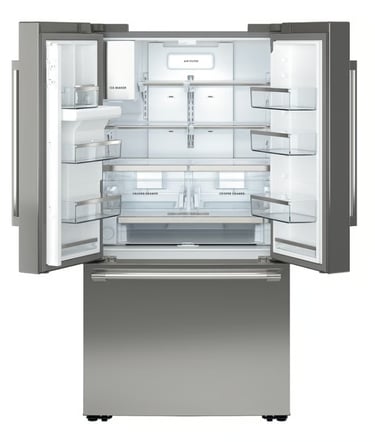
As you study the stock photos something feels familiar. The interior shots look nearly identical to the Frigidaire you were just considering. The shelving, the bins, the lighting and the overall layout match in a way that is hard to ignore. Frigidaire is owned by Electrolux, and Ikea often partners with Electrolux for its major appliances, which explains why the two models share so much DNA. You dig into the specifications and manuals and then it hits you. Even the water filter is the same.
At that point the conclusion is obvious. These refrigerators did not simply end up looking alike. They came from the same engineering platform and likely the same factory. Then you check the product labels. The Frigidaire says Made in Mexico. The STJÄRNSTATUS says Made in China. What gives?
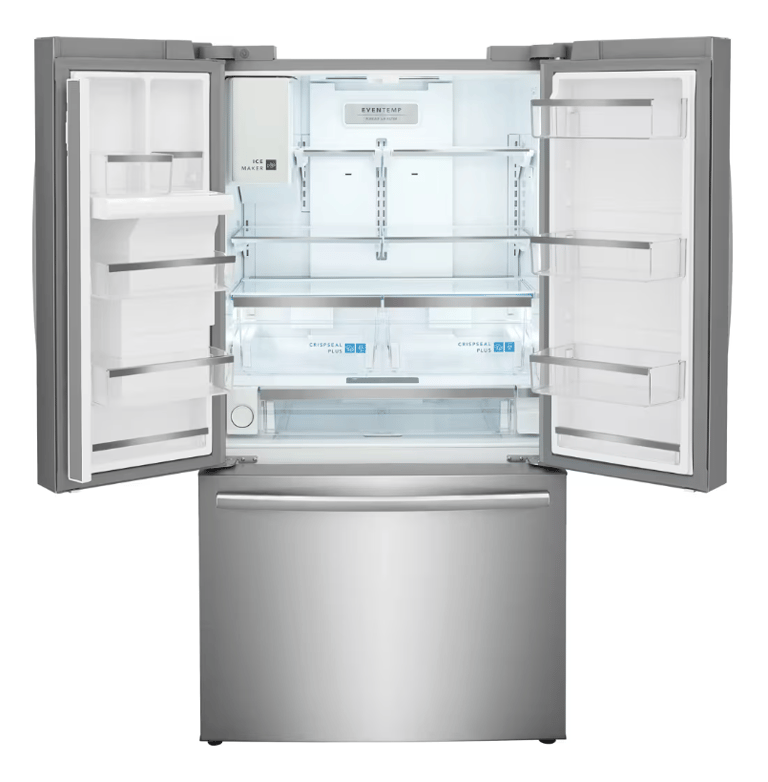
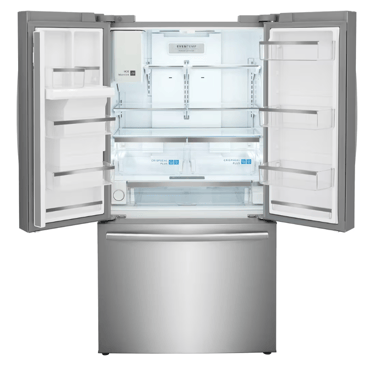
Frigidaire GRFC2353AF
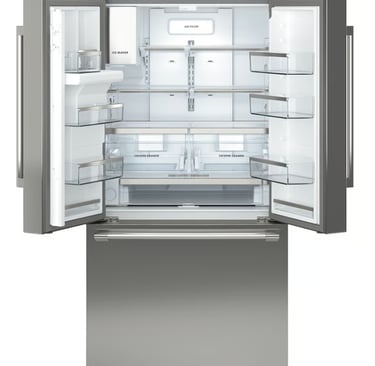
STJÄRNSTATUS 205.222.87
Why Shared Parts and Shared Factories Are So Common
Manufacturing happens in several different places along the journey from raw materials to the finished appliance in your home. Materials can come from one company, components from another, and final assembly from a third that has no direct relationship to the first two. In the refrigerator example above, it is clear that many of the components are the same, yet the final assembly is different. Final assembly is often what determines the country-of-origin label. This means two nearly identical products can end up with different national identities. Anywhere along the supply chain, production can converge or diverge. This leaves many appliances sharing components, engineering, and sometimes an end result that looks almost identical.
This is not unique to major home appliances. Every for-profit business faces constant pressure to improve quality or scale while lowering cost. That pressure creates opportunities for specialized manufacturers who can produce components more efficiently than the brands that sell the finished product. Companies like Midea and Haier have become global leaders in this space, supplying components and sometimes entire machines to well-known brands.
The overlap does not always involve entire products. Sometimes it is a single component or assembly. Current generation Frigidaire dishwashers share several parts with their Midea counterparts. If you compare the drain assemblies for both brands you will notice the similarities immediately. The Frigidaire and Samsung dishwashers are clearly different machines, yet some of their internal parts come from the same supplier.
Another example is more recent. Bosch home appliances has a long history of outsourcing certain categories. In partnership with Smeg, they produce freestanding professional style ranges that carry the Bosch logo. Over the past year, Bosch has also launched a new group of 100 series models, which are their more entry level pieces. These are built through a manufacturing partnership that allows Bosch to expand its lineup without investing in new tooling or factories.
Why Shared Parts and Shared Factories Are So Common
To remain competitive, many companies chose to purchase competing organizations. The clearest example of this is the Whirlpool Corporation. Over decades of service and manufacturing within the American appliance industry, Whirlpool became a household name. Its success in national retailers and independent dealers put the company in a strong financial position to merge with or acquire other brands. Over the years, Whirlpool either launched or bought names like Maytag, KitchenAid, Amana, Jenn Air, and Gladiator. When you compare these brands in the store, it becomes clear that there is a lot of engineering overlap between them. They are now manufactured under the same roof.
Whirlpool, much like the major auto manufacturers, created a tiered system to differentiate brand names and quality levels. General Motors has Cadillac, Buick, and Chevrolet. Whirlpool has Jenn Air as the premium option, KitchenAid as the semi premium option, and Whirlpool and Maytag as the base options. This allows the company to compete effectively in multiple customer segments. The shared engineering also gives Whirlpool strong access to parts and service, which is a major advantage for shoppers.
Not every company has found the same success with this strategy. A contemporary example is the purchase of Dacor by Samsung. Samsung bought Dacor in 2016. For several years, Samsung allowed Dacor to operate with some independence while benefiting from Samsung’s broader sales network. Dacor expanded from a premium lineup popular in the Western United States to a nationally recognized luxury brand. Samsung opened access to manufacturing and production that Dacor did not have before. By 2020, Dacor offered a full lineup of ventilation, microwaves, cooking, refrigeration, and dishwashers that stayed true to the Californian design and premium execution.
Now in 2026, Dacor sales have fallen sharply. The brand identity has faded under Samsung ownership. The reason is simple. Consolidation of manufacturing eroded the advantages of the Californian design and American production. The products began to resemble the earlier Samsung Chef Collection appliances rather than a distinct luxury brand. Time will tell if Dacor can regain its foothold in luxury American homes. A return to clear differentiation and premium manufacturing will be required for that to happen.
LG also sought to enter the luxury appliance market. Watching Samsung’s journey closely, LG took a different path. They created a new brand now known as SKS. Instead of absorbing an existing company, LG leveraged its own manufacturing capacity and brought in talent from competitors like Fisher and Paykel to raise the quality of the lineup. The result is a premium brand with a distinct ‘technicurian’ identity and high-quality execution. SKS is still growing, but LG’s vertical integration positions it well for long-term success rather than the short burst Samsung experienced with Dacor.
It goes to show that the strategic decisions manufacturers make, and where they choose to overlap production, can create very different outcomes. Those decisions shape the products that end up in your home and the satisfaction you feel when you use them.
Does Country of Origin Still Matter?
For many shoppers, the country of origin label feels like a shortcut for quality. Made in Germany, Made in USA, Made in China. These phrases carry emotional weight. In the past, they often reflected real differences in engineering, labor practices, and quality control. Today, the picture is more complicated.
Modern appliances are the result of global supply chains. A refrigerator might use a compressor from one country, electronics from another, insulation from a third, and final assembly in yet another. The label on the back usually reflects only the place of final assembly. It does not tell you where the critical components came from or who engineered the platform.
There are still factories and regions known for excellent work. Some German and American plants maintain very high standards. There are also plants in China, Mexico, Thailand, and other countries that produce outstanding products for premium brands. At the same time, there are disappointing products that carry prestigious country labels. Country of origin can still matter in specific cases, but it is not a reliable standalone indicator of quality. It is one small piece of a much larger story.
Consider our earlier example. SKS and Dacor are both luxury brands tied to South Korean parent companies, with much of their current manufacturing based in Asia. For years, Dacor appliances were built in Arizona and California, drawing on California driven design and engineering. Samsung found early success with those American made Dacor products, and then lost it as manufacturing shifted toward Samsung’s established Asian partners. The consolidation diluted what made Dacor special.
SKS took a different path. Instead of acquiring an existing brand, LG built SKS from the ground up using its own manufacturing capacity and a clear design identity. The result is a premium brand with steadily growing success, strong performance, and excellent customer service.
Both brands share similar countries of origin. Both come from parent companies with similar global footprints. Yet their quality, identity, and customer experience diverge in meaningful ways. This illustrates the real point. Country of origin tells you where something was assembled, not how well it was engineered, supported, or executed.
What Matters More than the Label on the Back
If the country-of-origin label is not enough, what should you pay attention to instead? This is where the global web becomes useful rather than confusing.
Brand Family and Manufacturer
Once you know which company builds the appliance, you can compare it to other products from the same manufacturer. A mid-tier model from a strong manufacturer often outperforms a flashy model from a weaker one.
Platform and Shared Components
Look for patterns in interiors, control layouts, hinges, racks, and filters. If two models share the same internal layout and parts, they are likely to share the same engineering platform. Reviews, service history, and technician feedback on that shared design matter more than the badge on the door.
Tier and Intended Use
Most manufacturers build clear tiers. Builder, residential, mass-luxury, and professional style. A premium tier product from a solid manufacturer is usually built with better materials, more robust components, and tighter quality control than their entry level pieces.
Service Network and Parts Support
Even the best appliance can need service. A brand with strong parts availability and a good service network will often provide better long-term experience than a slightly better-built product with poor support.
Real World Feedback
Long-term owner reviews, technician opinions, and dealer experience are invaluable. These voices see how products age, not just how they look on day one.
How Understanding the Global Web Helps You Shop Smarter
Once you see how interconnected the appliance world is, you stop making surface level comparisons. Instead of asking which country is printed on the back, start asking who engineered this, who built it, and what else they build.
This helps you avoid misleading comparisons. You will not be fooled into thinking two refrigerators are completely different just because one says Made in Mexico and the other says Made in China when you can see they share the same interior and components. You will also be less likely to dismiss a product from a country you are skeptical of if you know it comes from a strong manufacturer with a good track record.
Most importantly, this knowledge helps you make better long-term decisions. Choose products from brand families and platforms that have proven reliable. Prioritize strong service networks and parts support. Match the tier of the appliance to your expectations instead of overpaying for a badge or a label.
The global web is not something to fear. It is a reality to understand. Use this to your advantage and choose appliances that fit your home, your budget, and your standards with much more confidence.
One thing every brand does is try to wow you with impressive‑sounding specs. This “competing on numbers” approach suggests that the biggest fridge or quietest dishwasher must be the best. But is it? We’ll unpack that next time in “The Marketing Tricks Hidden in Your Appliance Specs — and Why Performance Doesn’t Always Match the Promise.”
Until Then,
Greg
Explore
Discover how appliances enhance your home life.
Inspire
© 2025. All rights reserved.